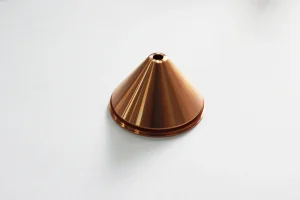
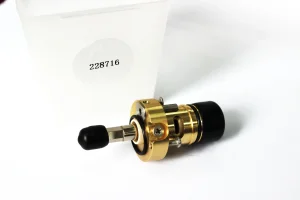
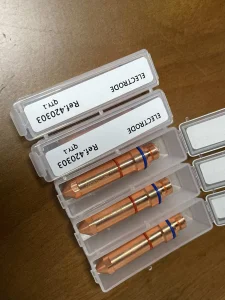
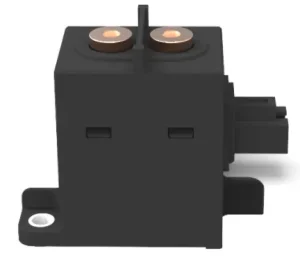
High-precision manufactured spare parts and laser/plasma tools designed for demanding industrial applications.
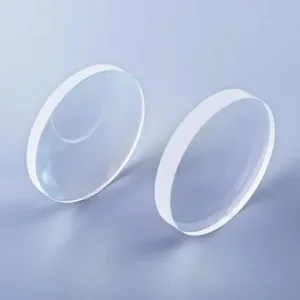
In ultra-high-power fiber laser systems (ranging from 10kW to 40kW and beyond), the laser protective lens (often called a cover slide or debris shield) acts as the final critical physical barrier safeguarding the highly sensitive, high-value optical focus elements within the laser cutting or welding head. Placed downstream from the collimating and focusing optics, this consumable window absorbs the brunt of thermal backlash, metallic dust back-spatter, and gaseous condensates generated during deep-penetration thermal cutting and keyhole welding procedures.
Optically, the protective window is fabricated from premium grades of synthetic fused silica (SiO₂), selected specifically for its exceptionally high laser-induced damage threshold (LIDT) and near-zero absorption coefficient at standard industrial wavelengths (typically 1064nm to 1080nm for fiber lasers). In an optimized manufacturing process, the raw substrate undergoes rigorous mechanical double-sided polishing to minimize wavefront distortion (measured in fractions of a wavelength, λ) and total thickness variation (TTV).
Uncoated fused silica exhibits a Fresnel reflection loss of approximately 3.5% per surface at normal incidence. For a 10kW laser beam, a 7% total reflection represents 700 watts of stray, back-reflected laser energy redirected back into the laser nozzle assemblies, causing rapid thermal expansion, focus shift, and ultimate catastrophic component failure. By applying double-sided, multi-layer Anti-Reflective coatings (AR/AR@1064-1080nm) via physical vapor deposition (PVD) or ion beam sputtering (IBS) technologies, the reflection coefficient per surface is suppressed to ≤ 0.1%. This ensures a total light transmittance exceeding 99.8%, optimizing power delivery to the target material.
Thermal lensing occurs when trace levels of dust or microscopic defects on the optic absorb incident laser energy. Due to the low thermal conductivity of silica glass, localized heat builds up rapidly, creating a temperature gradient that alters the refractive index of the glass (dn/dT). This causes the lens to behave as a thermal focus-shifting element, pulling the beam's focal point upward during continuous operations. An engineered protective lens from Suchen reduces optical absorption to less than 10 parts per million (ppm), preventing beam divergence and focal shifts, which stabilizes kerf width and maximizes process consistency.
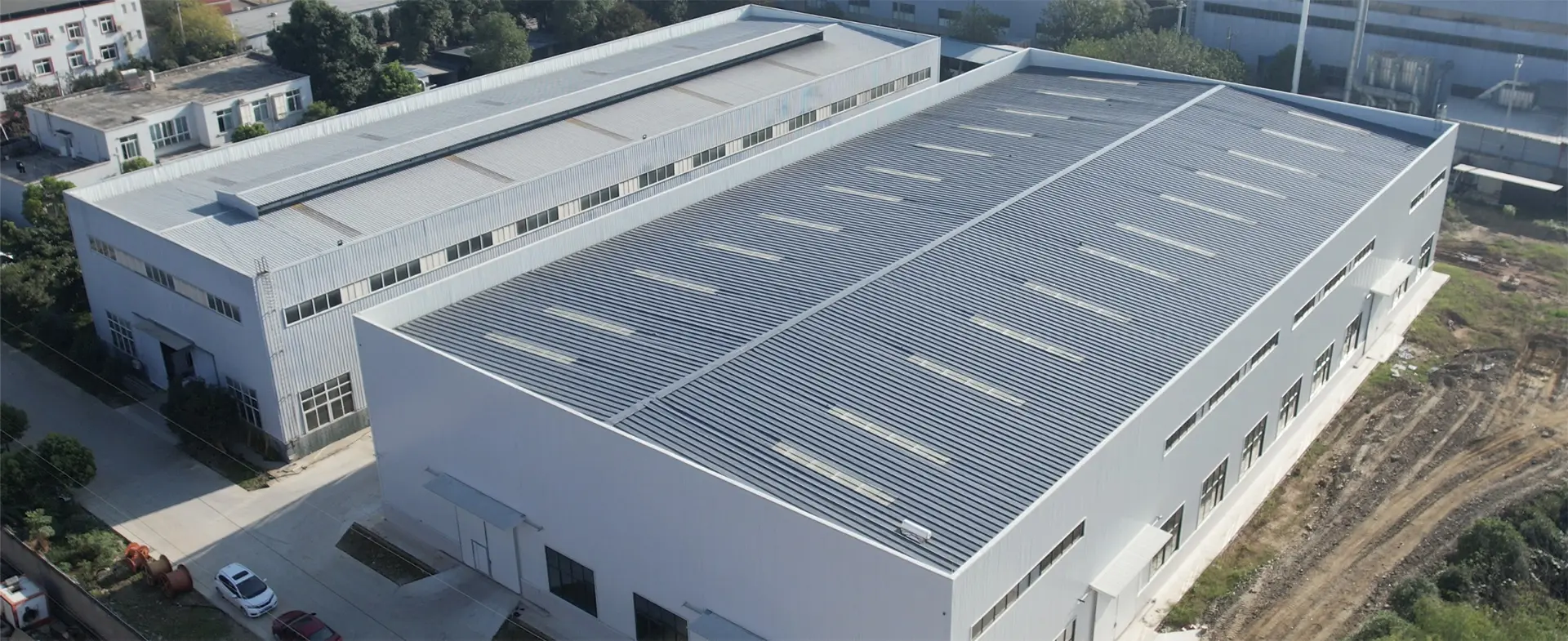
Established in 2010 and strategically located in the high-tech industrial corridor of the Qingbaijiang District in Chengdu, Chengdu Suchen Environmental Protection Materials Co., Ltd. has evolved into a highly diversified group enterprise. With over 14 years of research, development, and high-volume manufacturing excellence, our operational profile spans three key industrial divisions:
We align all manufacturing workflows with global environmental directives and hold various international authoritative quality certificates. This ensures all exports consistently meet high reliability parameters in European, North American, and Asian industrial markets.
Explore Technical SpecificationsAs a pioneer in premium optical and electric component fabrication, Chengdu Suchen Environmental Protection Materials Co., Ltd. operates on a foundational concept of "green sustainable development." In our cleanroom coating and high-capacity manufacturing lines, we implement non-hazardous materials and advanced, low-emission processes. This proactive approach ensures our optical protective windows, nozzles, and relays comply with stringent RoHS and REACH environmental guidelines.
Our vision is to facilitate the green transformation of the global manufacturing sector. We supply advanced materials and components that optimize energy efficiency, minimize material wastage, and extend machine lifetimes for industrial systems worldwide.

Bridging raw materials, optimized manufacturing processes, and global logistics channels.
The global demand for high-power lasers requires reliable, high-grade fused silica with exceptionally low concentrations of hydroxyl groups (OH-content < 1 ppm). High hydroxyl content increases infrared absorption, leading to thermal distortion. Our materials are sourced from validated, high-purity deposits to ensure minimal optical absorption.
Leveraging state-of-the-art double-sided planetary polishing systems, we consistently achieve surface roughness values below 0.5 nanometers (Ra ≤ 0.5 nm) and scratch-dig specifications of 10-5 per MIL-PRF-13830B. Every single lens undergoes laser interferometry verification to maintain strict surface flatness.
Operating out of Chengdu's Qingbaijiang District gives Suchen access to a highly integrated industrial ecosystem, specialized chemical supplies, and direct rail logistics. By combining large-scale cleanroom automation with advanced lean assembly principles, we deliver reliable performance at scale.
How our protective optics perform under heavy duty cycles in real-world fabrication plants.
During deep-section cutting of carbon steel and reflective alloys (such as brass and copper), back-reflections and slag spatter represent constant hazards to cutting heads. Our protective lenses, treated with high-durability AR coatings, resist thermal cycling and dust accumulation. This stability helps maintain the focal spot size, ensuring consistent kerf widths and burr-free cuts during long, automated production runs.
Automobile assembly lines operate continuously, requiring high reliability from laser welding consumables. The protection lens prevents volatile zinc fumes (from galvanized sheet metals) and metal spatter from contaminating the main focusing assembly. Our products are engineered for low thermal expansion to reduce downtime and prevent weld defects.
Cutting titanium alloys and advanced nickel superalloys requires consistent, high-power density at the tool tip. Suchen's protective lenses feature low internal absorption (under 10 ppm) to minimize wavefront distortion. This ensures high dimensional accuracy when cutting complex parts for turbine components and aerospace brackets.
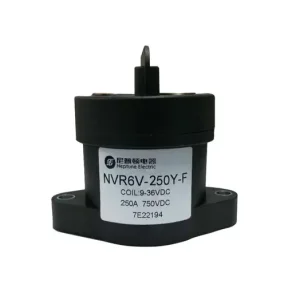
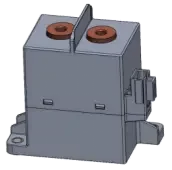
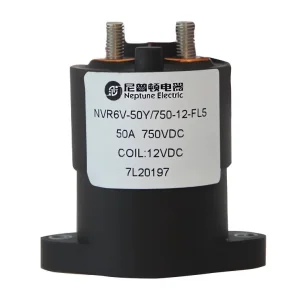
Beyond optics, Suchen manufactures high-voltage DC relays (such as the NVR6V-400M and NVR6V-50Y). These components are integrated into battery management systems (BMS) and EV charging infrastructure to provide reliable, high-voltage circuit protection under demanding electrical loads.
Meeting requirements for reliability, technical expertise, and client support.

We strive to become a globally recognized manufacturer of environmental materials and new energy components. By prioritizing technological innovation and material quality, we support green manufacturing transitions for multiple Fortune 500 enterprises.

Suchen advocates the core values of "integrity, cooperation, and win-win." We establish long-term partnerships by delivering consistent product quality and providing collaborative technical support for complex optical setups.

Upholding a "customer-first" philosophy, we assist clients from initial component matching through to global supply chain optimization. Our technical team is available to help resolve issues related to optic wear and laser alignment.
Our products undergo independent verification to ensure compliance with global industrial safety and performance standards.
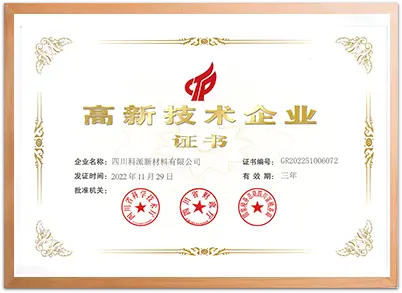
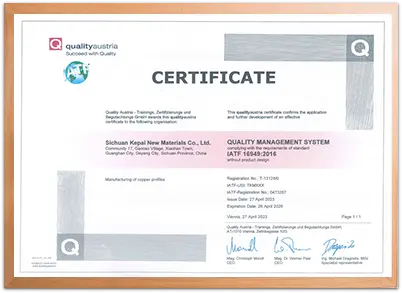


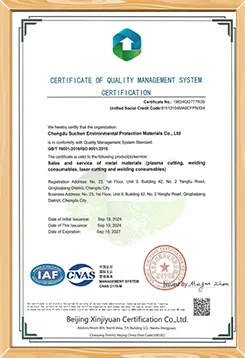
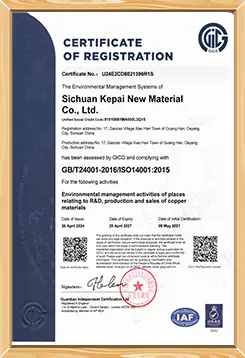
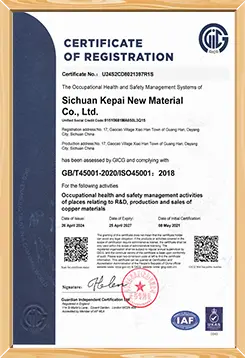
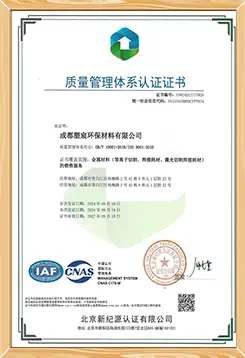
Common technical queries regarding laser protective window usage, maintenance, and ordering parameters.
The service life is primary dictated by the operating environment's cleanliness, cutting gas purity (oxygen/nitrogen), laser power density, and the quality of the AR coatings. A high-quality fused silica substrate with absorption < 10 ppm, combined with regular cleaning cycles, typically lasts between 80 to 200 operational hours in clean cutting conditions before performance degrades.
Symptoms of thermal lensing include a shift in the optimal focus height (focal drift) during a cut, increased dross formation on the bottom of parts, and an unstable kerf width. If you observe consistent cutting performance at the start of a sheet that degrades after several minutes of continuous pathing, thermal lensing is likely occurring due to absorption on the protective window.
Synthetic fused silica exhibits high thermal shock resistance, a low coefficient of thermal expansion (5.5 × 10^-7 / °C), and minimal absorption at near-infrared wavelengths (1030-1090nm). Standard optical glasses (like H-K9L or N-BK7) absorb significantly more infrared energy, which can lead to thermal lensing and potential cracking under high-power laser exposure.
To clean the optic, wear powder-free finger cots or gloves. Dispense a few drops of high-purity isopropyl alcohol (IPA) or acetone onto optical-grade lens tissue. Using the "drag-and-drop" method, pull the damp paper slowly across the surface in a single direction to remove dust and oil residues without scratching the AR coating.
Our thin-film deposition chambers utilize real-time quartz crystal microbalance monitors and optical monitoring systems. These tools continuously measure the physical thickness and refractive index of the coating layer as it is deposited, keeping variations within 1.5% across the batch.
We provide custom diameters (ranging from 12mm to 55mm), customized edge chamfer shapes, specific thickness margins, and optimized multi-wavelength AR coatings (e.g., dual-band coatings that transmit 1064nm laser light alongside a visible 632nm alignment beam).
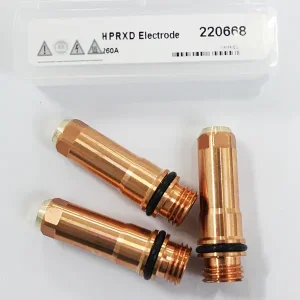
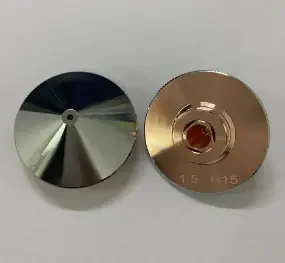
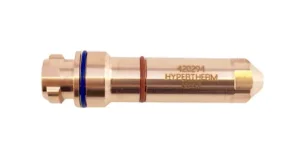
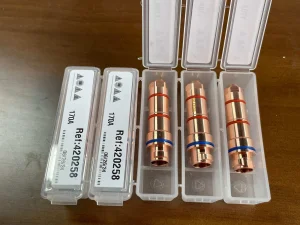
Browse our broader range of high-voltage DC relays, plasma electrodes, and laser cutting accessories.
 SUCHEN