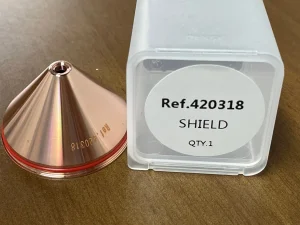
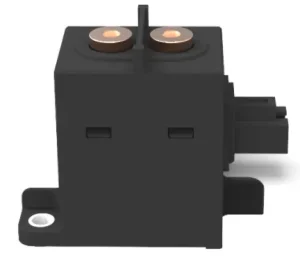
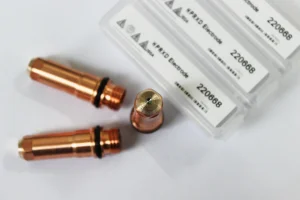
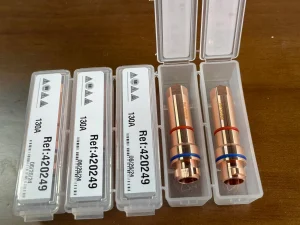
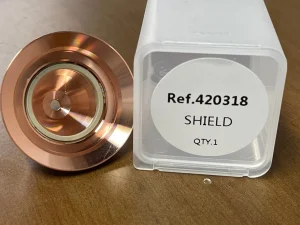
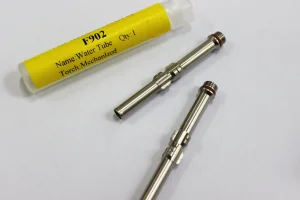
Explore Suchen's high-performance standard components engineered for extreme industrial environments and energy efficiency.
Founded in 2010 and strategically situated in the Qingbaijiang District of Chengdu, China, Chengdu Suchen Environmental Protection Materials Co., Ltd. has established itself as a pioneering force in the design, engineering, and manufacturing of advanced industrial consumables and electrical control components. Our operations are divided into three highly technical business sectors: plasma cutting and welding consumables, laser cutting and welding consumables, and high-voltage DC relays designed for new energy automobile configurations.
Over the past 14 years, Suchen has built a robust international reputation, aligning our engineering processes with global supply chain specifications. By leveraging Western metallurgical research with localized, high-precision Chinese manufacturing efficiencies, we ensure that every electrode, nozzle, swirl ring, and relay satisfies the rigorous reliability thresholds expected by our global client base, including several Fortune 500 enterprises.
Our Core Mission: To drive the green transformation of the global manufacturing industry through continuous metallurgical innovation, providing high-precision components that lower the total cost of ownership while minimizing environmental impacts.
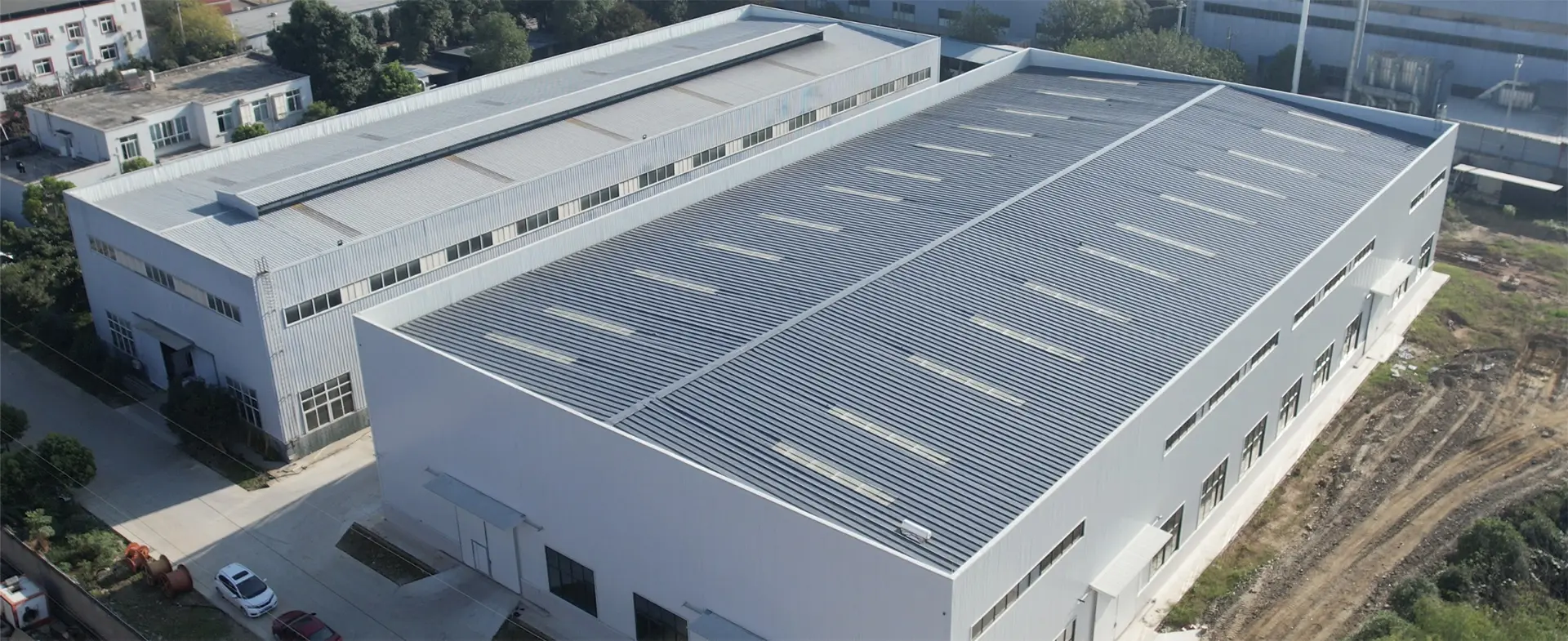
Focused on advanced plasma, laser consumables, and high-voltage control systems.

Modern industrial operations face a dual mandate: optimizing structural throughput while adhering to evolving international carbon policies and environmental directives. At Chengdu Suchen, our R&D roadmap is anchored in the concept of green sustainable development. This is reflected in our manufacturing procedures through the selection of raw materials, optimized chip collection systems, and eco-friendly packaging.
By investing in low-emission metallurgical processes, we reduce the footprint of high-energy arc welding and cutting applications. Our components, designed for long-life cycles, minimize material disposal requirements for end-users, providing a direct mechanism for international buyers to achieve corporate sustainability targets.
Analyzing the macro-economic forces, metallurgical requirements, and supply chains dictating the high-precision cutting sector.
Thermal cutting technology forms the structural backbone of modern heavy fabrication, marine architecture, aerospace systems, and civil infrastructure. Within this vertical, plasma arc cutting represents one of the most cost-efficient and high-velocity methodologies for profiling non-ferrous and carbon steel materials. However, the performance of multi-million dollar CNC automated cutting gantries is fundamentally limited by the wear rate of a small copper-alloy cathode: the plasma electrode.
Global demand for customized plasma consumables has grown due to the adoption of Fine-Focus and High-Definition (HD) plasma technologies. These systems compress the thermal arc through high-velocity gas dynamics to generate temperatures exceeding 25,000°C. In this thermal regime, standard electrode materials suffer rapid cathodic erosion. Consequently, there is an industrial shift toward advanced metallurgy, involving composite structures that feature hafnium inserts securely bound within high-conductivity silver or oxygen-free copper matrices.
From an international procurement perspective, key industrial sectors (including European shipyards and North American structural steel fabricators) are moving away from proprietary OEM monopolies. The market is transitioning toward qualified aftermarket and custom ODM/OEM partners capable of delivering equivalent or superior cut geometries at a significantly reduced operating cost. The primary challenge remains the sourcing of high-purity hafnium and the execution of high-density compression bonding, which prevents thermal resistance between the emitter and the electrode body.
How Chengdu Suchen leverages local metallurgical clusters, advanced automation, and the Chengdu-Europe Express Railway link.
The efficiency of Chinese manufacturing is often attributed simply to labor cost advantages. However, at Chengdu Suchen, our competitive advantage lies in systematic supply chain integration, regional raw material abundance, and advanced manufacturing technologies. Located in Chengdu's Qingbaijiang District—a key hub of the Chengdu-Europe Railway Express—Suchen provides Western buyers with a direct logistics pipeline that avoids maritime transit delays and coastal port congestion.
Our manufacturing facility utilizes advanced production workflows:
Understanding the critical role of material science in plasma arc physics and thermal transfer.
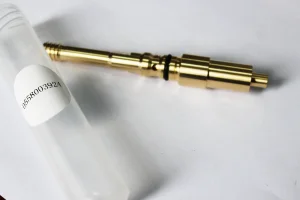
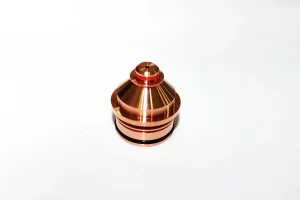
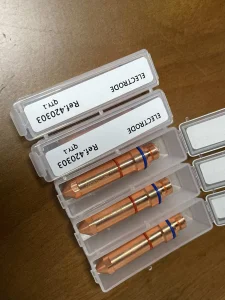
An effective plasma arc system is a balanced thermodynamic assembly. The electrode serves as the cathode, emitting electrons to establish the arc, while the nozzle constricts and focuses this energy. The swirl ring controls the gas vortex to stabilize the arc, and the shield protects the entire assembly from molten metal splash-back. If any single component deviates from nominal specifications, the entire cutting sequence fails.
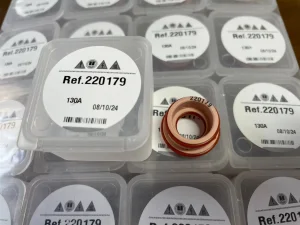
For example, a misaligned swirl ring (such as a subpar 220179 replacement) causes the plasma vortex to spin off-center. This results in the arc attaching to the interior wall of the nozzle rather than passing cleanly through the center orifice. This phenomenon, known as double-arcing, damages both the nozzle and the electrode, leading to poor cut quality, excessive bevel angles, and unplanned machine downtime.
Chengdu Suchen addresses this by performing multi-stage fluid dynamic simulations and thermal stress analyses during the design phase. By sourcing high-purity hafnium inserts from qualified global suppliers and pairing them with high-purity copper backings, Suchen consumables maintain arc stability over extended duty cycles, matching OEM wear profiles while optimizing cost-per-cut ratios.
Explaining how Suchen translates arc-control experience from plasma cutting into reliable new energy relay components.
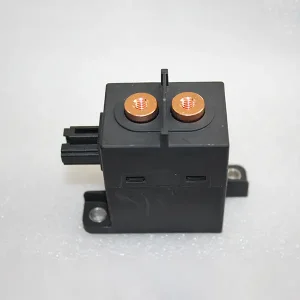
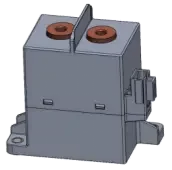
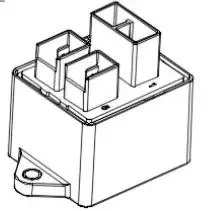
At first glance, plasma consumables and high-voltage DC relays (such as the OEM NVR6V-400M and NVR6V-200D series) seem to belong to separate industries. However, both technologies center on the management of high-energy electrical arcs. In plasma cutting, the goal is to stabilize and focus a high-current arc. In high-voltage DC relays, which serve as safety switches in electric vehicle battery packs, the challenge is to quickly extinguish the arc that forms when contacts open under load.
When an EV battery disconnects, the high voltage attempts to jump the gap between contacts, creating a destructive arc that can weld contacts shut. Mitigating this risk requires expertise in gas-filling, magnetic blowout technology, and specialized contact metallurgy (such as silver-nickel or silver-tin-oxide composites). Suchen uses its research on high-temperature plasma arc behaviors to design relays that manage these events safely.
Our facilities process oxygen-free copper and apply hermetic sealing techniques across both divisions. This shared technical platform enables Suchen to produce reliable electrical control components for the new energy sector, meeting the safety requirements of major electric vehicle manufacturers.
Delivering reliable solutions through structured values, clear customer service, and international compliance.

To become a globally recognized partner in environmental materials and new energy components, driving green manufacturing initiatives and serving as a trusted supplier to Fortune 500 enterprises.

Operating on the core principles of integrity, cooperation, and mutual benefit, we build long-term relationships with our clients and partners through honest, transparent communication.

We maintain a client-first service philosophy, providing end-to-end technical support, reliable logistics options, and dedicated account management for global buyers.
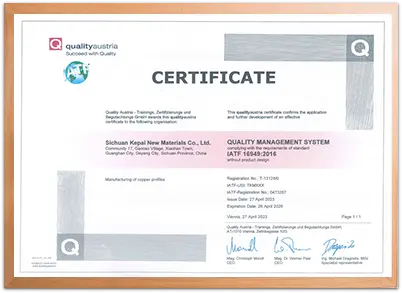
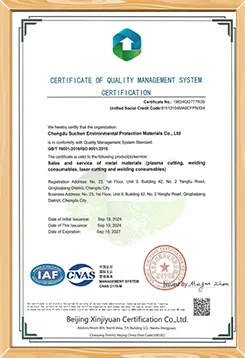
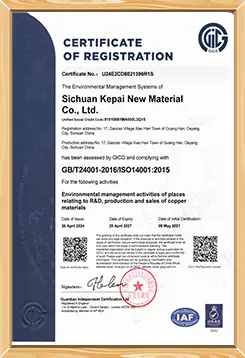
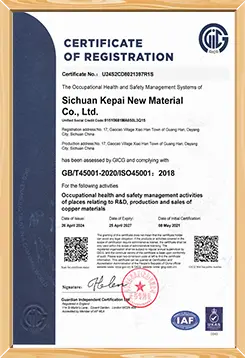
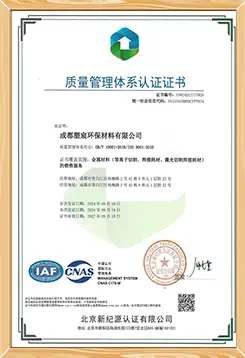
Suchen's manufacturing processes conform to recognized international quality standards, ensuring compliance across global markets.
Our Quality Management System (QMS) monitors the production process from raw material arrival to final inspection. Each batch of electrodes, nozzles, and relays undergoes coordinate measuring machine (CMM) testing, electrical continuity profiling, and gas tightness verification to confirm compliance with global standards.
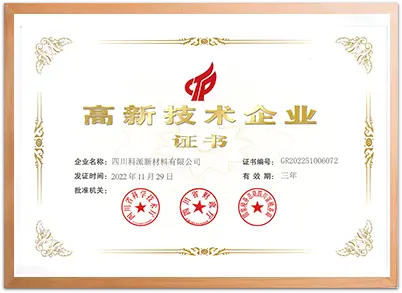
Through systematic quality control, Chengdu Suchen products have achieved certifications that facilitate smooth integration into North American, European, and Asia-Pacific industrial sectors.


Common questions regarding material selection, wear patterns, logistics, and technical specifications.
Further components designed to support manufacturing, logistics, and heavy industrial applications.
 SUCHEN